Mid-Maryland
Oral and Maxillofacial Surgery, PA

Call Us Email Us Map & Directions

Mobile Design by PBHS © 2013

Mid-Maryland
Oral and Maxillofacial Surgery, PA

Welcome to Mid-Maryland OMS!

Oral and Maxillofacial Surgery requires additional years of hospital-based surgical and anesthesia training after graduation from dental school. At Mid-Maryland Oral & Maxillofacial Surgery, Our goal is to provide the patient with the finest surgical care. Call our Frederick MD office at 301-694-2300 for more information.

As oral and maxillofacial surgeons, Drs. Tan, Zwack, and Nawab manage a wide variety of problems relating to the mouth, teeth and facial regions. They are well trained in Oral and Maxillofacial Surgery with expertise ranging from Dental Implant Surgery and Wisdom Tooth Removal to Corrective Jaw Surgery. This also includes techniques designed to rebuild bone structure with minimal surgical intervention and optimal patient comfort. They can also diagnose and treat Facial Pain, Fractures and SoftTissue Issues.

Mobile Design by PBHS © 2013

Mid-Maryland
Oral and Maxillofacial Surgery, PA

Our Services

Below are just a few of the services we offer. Contact our office for more information.

Dental Implants

Dental implants are designed to provide a foundation for replacement teeth which look, feel and function like natural teeth. The person who has lost teeth regains the ability to eat virtually anything, knowing that teeth appear natural and that facial contours will be preserved. The implants themselves are tiny titanium posts, which are inserted into the jawbone where teeth are missing. These metal anchors act as tooth root substitutes. They are surgically placed into the jawbone. The bone bonds with the titanium, creating a strong foundation for artificial teeth. Small posts are then attached to the implant, which protrude through the gums. These posts provide stable anchors for artificial replacement teeth. Implants also help preserve facial structure, preventing bone deterioration that occurs when teeth are missing.

Once the implants are in place, they will serve you well for many years if you take care of them and keep your mouth healthy. This means taking the time for good oral hygiene (brushing and flossing) and keeping regular appointments with your dental specialists.

Wisdom Teeth Removal

Wisdom teeth are the last teeth to erupt within the mouth. When they align properly and gum tissue is healthy, wisdom teeth do not have to be removed. Unfortunately, this does not generally happen. The extraction of wisdom teeth is necessary when they are prevented from properly erupting within the mouth. They may grow sideways, partially emerge from the gum and even remain trapped beneath the gum and bone. Impacted teeth can take many positions in the bone as they attempt to find a pathway that will allow them to erupt successfully. These poorly positioned impacted teeth can cause many problems. When they are partially erupted, the opening around the tooth allows bacteria to grow and will eventually cause an infection. The result: swelling, stiffness, pain and illness. The pressure from the erupting wisdom tooth may move other teeth and disrupt the orthodontic or natural alignment of teeth. The most serious problem occurs when tumors or cysts form around the impacted wisdom tooth, resulting in the destruction of the jawbone and healthy teeth. Removal of the offending impacted tooth or teeth usually resolves these problems. Early removal is recommended to avoid such future problems and to decrease the surgical risk involved with the procedure.

Bone Grafting

Over a period of time, the jawbone associated with missing teeth atrophies or is reabsorbed. This often leaves a condition in which there is poor quality and quantity of bone suitable for placement of dental implants. In these situations, most patients are not candidates for placement of dental implants. Today, we have the ability to grow bone where needed. This not only gives us the opportunity to place implants of proper length and width, it also gives us a chance to restore functionality and esthetic appearance.

Bone grafting can repair implant sites with inadequate bone structure due to previous extractions, gum disease or injuries. The bone is either obtained from a tissue bank or your own bone is taken from the jaw, hip or tibia (below the knee.) Sinus bone grafts are also performed to replace bone in the posterior upper jaw. In addition, special membranes may be utilized that dissolve under the gum and protect the bone graft and encourage bone regeneration. This is called guided bone regeneration or guided tissue regeneration. Major bone grafts are typically performed to repair defects of the jaws. These defects may arise as a result of traumatic injuries, tumor surgery, or congenital defects. Large defects are repaired using the patient’s own bone. This bone is harvested from a number of different sites depending on the size of the defect. The skull (cranium), hip (iliac crest), and lateral knee (tibia), are common donor sites. These procedures are routinely performed in an operating room and require a hospital stay.

Oral Pathology

The inside of the mouth is normally lined with a special type of skin (mucosa) that is smooth and coral pink in color. Any alteration in this appearance could be a warning sign for a pathological process. The most serious of these is oral cancer. The following can be signs at the beginning of a pathologic process or cancerous growth:

  • Reddish patches (erythroplasia) or whitish patches (leukoplakia) in the mouth
  • A sore that fails to heal and bleeds easily
  • A lump or thickening on the skin lining the inside of the mouth
  • Chronic sore throat or hoarseness
  • Difficulty in chewing or swallowing

These changes can be detected on the lips, cheeks, palate and gum tissue around the teeth, tongue, face and/or neck. Pain does not always occur with pathology, and curiously, is not often associated with oral cancer. However, any patient with facial and/or oral pain without an obvious cause or reason may also be at risk for oral cancer. We would recommend performing an oral cancer self-examination monthly and remember that your mouth is one of your body’s most important warning systems. Do not ignore suspicious lumps or sores. Please contact us so we may help 301-694-2300

TMJ Disorder

TMJ (temporomandibular joint) disorders are a family of problems related to your complex jaw joint. If you have had symptoms like pain or a “clicking” sound, you’ll be glad to know that these problems are more easily diagnosed and treated than they were in the past. These symptoms occur when the joints of the jaw and the chewing muscles (muscles of mastication) do not work together correctly. TMJ stands for Temporomandibular Joint, which is the name for each joint (right and left) that connects your jaw to your skull. Since some types of TMJ problems can lead to more serious conditions, early detection and treatment are important. No one treatment can resolve TMJ disorders completely and treatment takes time to become effective. Mid-Maryland Surgeons can help you have a healthier and more comfortable jaw.

Do you have a TMJ Disorder?

  • Are you aware of grinding or clenching your teeth?
  • Do you wake up with sore, stiff muscles around your jaws?
  • Do you have frequent headaches or neck aches?
  • Does the pain get worse when you clench your teeth?
  • Does stress make your clenching and pain worse?
  • Does your jaw click, pop, grate, catch, or lock when you open your mouth?
  • Is it difficult or painful to open your mouth, eat or yawn?
  • Have you ever injured your neck, head or jaws?
  • Have you had problems (such as arthritis) with other joints?
  • Do you have teeth that no longer touch when you bite?
  • Do your teeth meet differently from time to time?
  • Is it hard to use your front teeth to bite or tear food?
  • Are your teeth sensitive, loose, broken or worn?

Mobile Design by PBHS © 2013

Mid-Maryland
Oral and Maxillofacial Surgery, PA

Meet Our Doctors

Dr. Peter M. Tan

Dr. Peter M. Tan
President of the ADSA
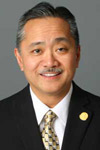
Dr. TanBorn in New York City and raised in Washington, DC, Dr. Peter M. Tan is an Oral and Maxillofacial Surgeon who joined the ADSA as a resident member in 1986, received his Fellowship in General Anesthesia in 1990 and became active in the Maryland Component in 1991, eventually becoming President of Maryland in 1996. He joined the ADSA Board of Directors in 2001. Through these many years, he was the Annual Meeting Co-Chair in 1999 and 2009 and has served or chaired every committee of the ADSA. He has recently been appointed as one of the national faculty for the ADA’s "Recognition and Management of Complications during Minimal and Moderate Sedation" course. He is a partner/owner of Mid-Maryland Oral and Maxillofacial Surgery, P.A.

Dr. Tan has received Fellowships with the American College of Dentists, the International College of Dentists, the Pierre Fauchard Academy, the Academy of Dentistry International, the American Association of Oral and Maxillofacial Surgeons, the American College of Oral and Maxillofacial Surgeons, the American Dental Society of Anesthesiology, and the Academy of General Dentistry. He is a Diplomate of the American Board of Oral and Maxillofacial Surgery and the National Dental Board of Anesthesiology.

Dr. William E. Zwack
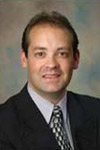
Dr. ZwackDr. Zwack was born in Seville, Spain. Because Dr. Zwack was raised by his American father and Spanish mother he is bilingual. At age 15, he came to Elkins, West Virginia as an exchange high school student. After high school, he completed his undergraduate studies in Biology at Wheeling Jesuit University in Wheeling, West Virginia. After that, he attended Howard University College of Dentistry in Washington, DC for his dental degree Upon graduation from dental school, Dr. Zwack completed his four-year Oral and Maxillofacial Surgery training program at Howard University Hospital and its affiliates in Washington, DC. This training included a rotation at Saint Barnabas Hospital in New York, NY.

Dr. Zwack is a member of the American Dental Association, Middle Atlantic Society of Oral and Maxillofacial Surgeons, American Association of Oral and Maxillofacial Surgeons and American College of Oral and Maxillofacial Surgeons. He is Board Certified by the American Board of Oral and Maxillofacial Surgery. Dr. Zwack is the current Chief of Oral Surgery at Frederick Memorial Hospital. Dr. Zwack practices a full range of Oral and Maxillofacial Surgery with primary interest in dental implants, dentoalveolar surgery, corrective and reconstructive facial surgery and facial trauma.

Dr. Ayesha Nawab

Dr. NawabDr. Nawab joins Mid-Maryland Oral and Maxillofacial Surgery by way of Houston, Texas where she taught for three years at the University of Texas.  She was also the Chief of Oral and Maxillofacial Surgery at Ben Taub Hospital in Houston.  Dr. Nawab practices a broad spectrum of oral and maxillofacial surgical procedures and has a special interest in wisdom tooth surgery, dental implants, bone graft, oral pathology and treatment of facial trauma.   Dr. Nawab is married.  She and her husband enjoy traveling and cooking, but most of all, spending time with their son. 

Education

  • B.S., University of Connecticut
  • D.M.D., Harvard School of Dental Medicine
  • M.D., University of Connecticut
  • Oral & Maxillofacial Surgery and General Surgery specialty training at University of Connecticut

Affiliations

  • Member of the Maryland Society of Oral and Maxillofacial Surgery
  • Fellow, American Association of Oral and Maxillofacial Surgery
  • Diplomate, American Board of Oral and Maxillofacial Surgery

Mobile Design by PBHS © 2013

Mid-Maryland
Oral and Maxillofacial Surgery, PA

Contact Us

Our Office

Mid-Maryland
Oral and Maxillofacial Surgery, PA

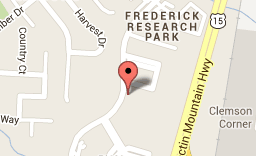
68 Thomas Johnson Drive, Suite A
Frederick, MD 21702
Fax: 301-694-7372

Call Us Email Us
Map
Get Directions

Mobile Design by PBHS © 2013